alberta,canada,chair rentals,chair renter,ei,employment insurance

EMPLOYMENT INSURANCE AND CHAIR RENTERS
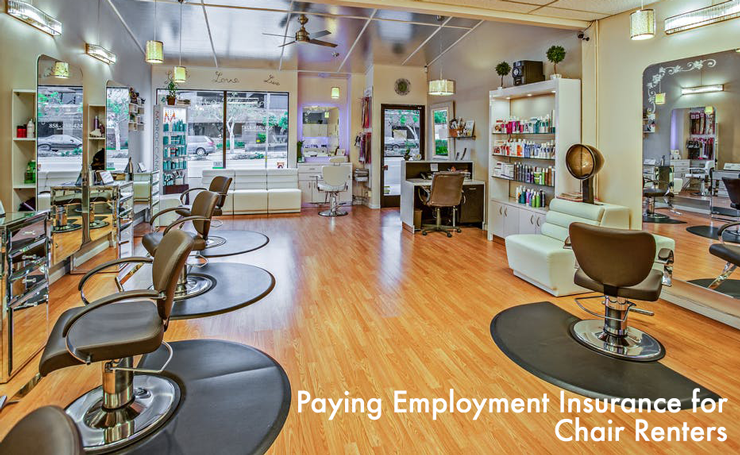
paying employment insurance fees for chair renters

DO I HAVE TO PAY EI FOR CHAIR RENTERS?

Did you think Employment Insurance and Chair Renters would never come up in the same sentence?

CTV NEWS Saskatoon did a report on how salon owners that rent our chairs are impacted by Employment Insurance fees imposed by the Canada Revenue Agency (CRA).

The report focuses on Stacey Zielinski , owner of The Beach Beauty Bar in Martensville, Saskatchewan. Like many others, Stacey was under the impression that chair renters are independent contractors and therefore are not governed under employment laws and regulations.

Luckily for Zielinski, her tab was not too high, as only 1/5 hairstylists was a chair renter. This got us thinking though, how does this impact the industry?

What does this mean for salon owners who only rent out chairs?

Renting out chairs to hairstylists has always been an attractive option for salon owners. Renting out chairs produces consistent income, removes employee-related issues, and was formerly believed to eliminate the cost of wages and MERCS.  

It is widely believed that the salon owner does not pay money to the renter; but they do however collect money from the renter. Typically, the hairstylist pays a monthly fee to offer services to their growing clientele from an already established salon.  In exchange for this fee, the salon owner allows use of the chair and fixtures during operating hours.

Contrary to popular belief, salon owners are liable to pay Employment Insurance fees to the CRA for chair renters. Normally, independent contractors from other industries are not eligible for EI, however, there is an exception for barbers and hairstylists.

Normally, EI is paid to employees based on the hours worked per pay period. Because chair renters dictate their own hours, the CRA calculates EI fees on the number of days the chair renter offered services in the establishment.

Why is there an exception for barbers and hairstylists?

As it was explained by a CRA representative, this exception was put into place to secure the income of a hairstylist in the event that the salon owner is no longer able to provide the chair renter with a space to work from. Examples are salon owners who are evicted from their rented space or go out of business.  

What is the difference between independent contractors in the beauty industry versus other industries?

Nothing really. We searched for answers but could not find a clear explanation for this exception.

The exception to the exception.

While a salon owner must pay the employer portion of EI fees for independent contractors, this fee is eliminated IF the chair renter is incorporated.

What is the difference between a sole proprietorship, a partnership, and a corporation?

All of the above are forms of entrepreneurship. They differ in a few ways including the annual costs and taxes payable to the CRA. The main difference is that in a sole proprietorship or partnership, the business is an extension of you (and your partners if applicable) whereas a corporation is viewed as an entity external to you.  It even has its own SIN, however, it’s called a BN (Business Number).

There are many benefits to registering your business as a corporation. Learn more.

Where does this legislation come from?

It is believed that this legislation was created to protect the income of women and single mothers based on the occupation’s demographic at the time the legislation was created.

Two conditions apply to this employment insurance regulation:

  1. The barber or hairstylist offers services out of the establishment.
  2. The barber or hairstylist is not the owner of the establishment.

What if the salon owner also owns the building?

Unfortunately, it doesn’t matter. Salon owners who own the building must also pay EI fees.

What if the hairstylist does not pay EI?

Unfortunately, it doesn’t matter. The onus is on the salon owner to pay the employer portion of a chair renter’s EI whether or not they pay their own premiums.

Does this legislation affect room rentals for esthetics services?

No, this legislation only applies to Hairstylists and Barbers at the time this article was published.


EXECUTIVE SPA GROUP 

Beauty Industry Resource Centre

(780) 604 2772
Continue Reading

apprenticeship,beauty industry,canada,estheticians,hairstylists,mobility,nail technicians,provinces,regulations,requirements,skin care

Beauty Industry Mobility Across Canada

Beauty Industry Mobility Across Canada

Beauty Industry Mobility Across Canada

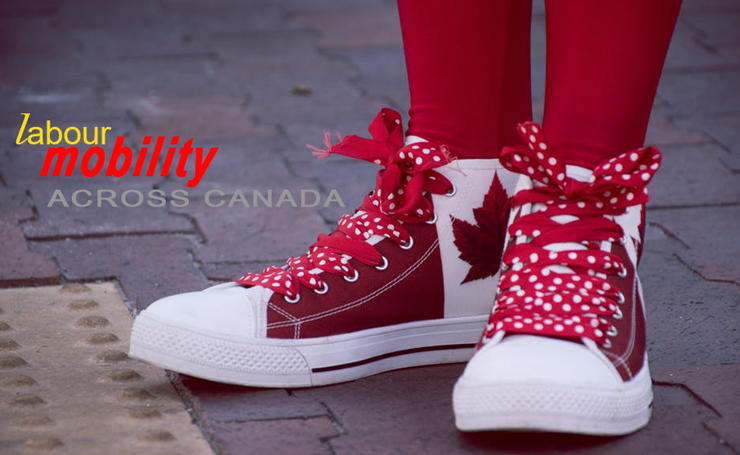
With the growing number of beauty professionals in this country, we thought we would take a look at employment mobility through Canada. While certification standards differ from province to province, here are some things you need to know if you are planning to move. In Canada, all of the provinces and territories have regulation for hairstylists through the Red Seal Journeyman Certification. With this certificate, you are able to legally work from province to province. However, each province has different standards of training, so check out the National Employment Requirements to find out what you need to begin your trade. Barbering falls under the Hairstylist occupation as well, so certification will still be mandatory to practice this specialized craft. As an Esthetician in Canada, however, you may find your mobility limited, as few provinces have regulation trade requirements:
  • New Brunswick regulates Estheticians.
  • Manitoba regulates their Electrologists and Estheticians through Apprenticeship Manitoba
  • Saskatchewan divides their esthetic regulations between Nail Technicians and Skin Care specialists, also through an apprenticeship and trade certification commission.
Training and on-the-job hours may transfer to a regulated province if you meet their individual criteria. If you are moving outside of a regulated province, your training and certification will be appealing to employers in a province that does not have these requirements. While the country is looking to start standardizing esthetics, hairstyling is the only beauty industry career that has national standards. If you are considering moving, or you need more information about labour mobility in Canada, visit Worker’s Mobility. EXECUTIVE SPA GROUP

Continue Reading

Store-bought vs. Professional skincare

Enlightening your clients: The difference between store-bought and professional skincare

Selling skincare at work comes naturally when you are able to answer a client’s questions regarding the professional lines carried at your salon or spa. When you have the answers, your sales pitch can turn into a fun, fact-filled conversation.

Have you ever had a client ask you what the difference is between store-bought and professional skincare?

Walking up and down the skincare aisles of the drugstore can leave your clients’ head spinning with promises of “No More Wrinkles” or “The Best Acne Treatment” and my personal favourite, “The Best Anti-aging Cream”.

The fact is there is no one product on the market that can deliver on these claims alone, especially ones found at the drugstore.

Why?

Because to get results to actually back-up these claims clients need to use high quality products with an array of ingredients and these are not found on shelves.

They are found at spa’s, medi-spas and dermatologist offices. Places such as ‘Sephora’ and ‘Shopper’s Beauty Boutique’ are also a few good places to get good quality products.

Let’s take a deeper look at the difference between store-bought products versus professional skincare, so that we can educate our clients on the difference.

Ingredients and Dosages

The skincare market is a billion dollar industry which relies heavily on marketing to get people to pick their products over others. They usually do this is by using some of the catch phrases mentioned at the beginning of this article.

People who are not in the skincare industry, for example our clients, may not be able to verify if the ingredients have the ability to actually benefit their skin.
Additionally for safety reasons, store-bought products cannot have high amounts of active ingredients because they must be safe for the general public to pick off a shelf, without consultation with a professional. For this reason, drugstore products usually have low levels of active ingredients which may not, and more often, does not, live up to their promises.

On the other hand…

Professional products contain high amounts of active ingredients that can actually back-up the claims they promise.
They contain numerous active or as I like to call them “performance” ingredients such as antioxidants like Vitamin C, B, and Ferulic acid, acne fighting ingredients like Salicylic acid, Anti-Aging acids such as Glycolic acid and the best ingredient to fight aging… Retinol… just to name a few.

The reason professional products are not sold in stores is because of the science behind the products. People selling these products have to be properly trained on skin analysis, ingredients, and contraindications. They are expected to educate the client on how to use the products safely and recommend the appropriate products for their skin/ skin concerns.

In conclusion, when it comes to skincare the best thing to do is educate your clients on the differences between professional and store bought products, the price point may be a bit higher but if results are what your clients want; knowing what they need to use to get those results will usually out weigh any price concerns.

Shauna Jenkins
EXECUTIVE SPA GROUP

Continue Reading

beauty industry,beauty jobs,workplace bullying

Is Bullying affecting your Workplace?

Is Bullying affecting your Workplace?

Society has come along way in terms of acceptance and awareness. These are two different but equally important terms. Acceptance can be defined as a person’s agreement or approval to the reality of a situation without attempting to change it. Awareness is knowledge or perception of a situation or fact. Whether it be gender, race, religion, disabilities or sexual orientation, all people are entitled to equal rights and respect.

Bullying is a huge issue that is being recognized and addressed worldwide whether it be verbal, physical or cyber. There is a certain stigma that adults are not a target of bullying, maybe a preconceived notion that unless you are under the age of 18 you should be able to “brush off,” “get over” or “have thicker skin” towards unkind acts or words aimed at you.

The truth is there are no limitations or age requirements as to who is a victim of bullying. It is important to be able to recognize what bullying is and the negative effect it can have on the team and the business as a whole. If you see bullying in the workplace, it is your responsibility to do your part in contributing to a healthy workplace. Here are some tips from Alberta Learning Information Services on how to identify, address and resolve any bullying.

There are laws to protect employees from bullying. Take a look at our Employment Regulations Contact List to know different laws created for your protection.

EXECUTIVE SPA GROUP

Continue Reading

health and safety,inspection,occupational health,spa industry standards

Are you ready for an inspection?

BACTERIA IS A BEAUTY BANISHER

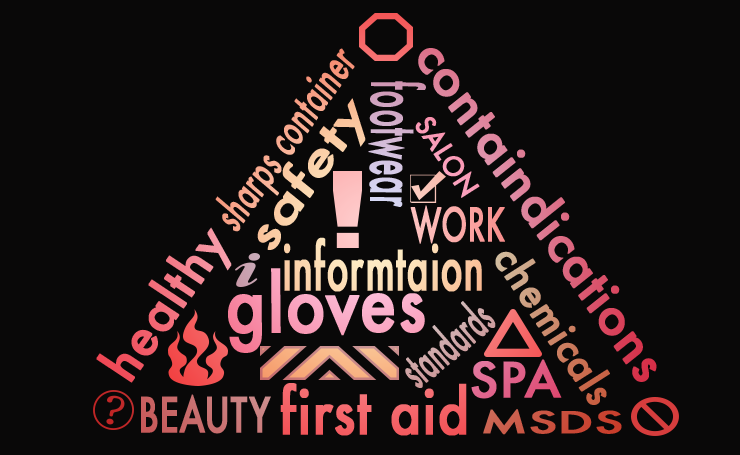
As service providers our goal is to send clients home feeling amazing, relaxed, and rocking beautiful manicured fingers and toes, glowing skin and trendy/healthy hair. We do our best to accomplish our goals. We use the best products and ensure we are properly trained. We know what it takes to make our clients look their best… but do we know how to best protect our clients? Germs and viruses will take that amazing service upside down! Let’s take a look at some of the guidelines set out by Alberta Health Services to keep our clients looking gorgeous, glowing and most importantly germ free! Some serious viruses and infections can be and have been known to be spread in salons and spas. Hepatitis C, MRSA, respiratory disease, fungus and even Hot Tub Folliculitis (an infection caused by a type of bacteria that thrives in poorly sanitized foot baths) have been confirmed.

Are You Inspection Ready?

These are some of the guidelines to follow to help you protect your clients:
  • All work surfaces shall be constructed of smooth, non-porous and cleanable materials (i.e. painted drywall, vinyl composite tiles, linoleum or sealed concrete, etc.).
  • Work areas must be adequately lit and ventilated.
  • Client contact surfaces (tables, chairs, headrests etc.) must have a smooth, non-porous and easy to clean finish.
  • Adequate storage space must be available for equipment, instruments and supplies.
  • Suitable garbage containers must be readily available, maintained and emptied regularly.
  • Approved disinfectants for disinfecting equipment, surfaces and reusable instruments must be available.
  • An acceptable skin antiseptic shall be provided for skin preparation and post treatment.
  • Items, that cannot be properly disinfected/sterilized or are intended for single use, must be discarded after each client use.
  • A puncture-resistant container shall be provided for the disposal of needles, razor blades and other sharp devices or instruments.
  • Pigments, cosmetics and other supplies must be labeled and handled in accordance with the manufacturer’s instructions.
  • Chemicals, detergents and cleaners must be stored, maintained and prepared in accordance with the manufacturer’s instructions.

The spread of these beauty banishing bacteria is completely preventable and should be the #1 priority.

So remember to follow all sanitization procedures, use the proper level disinfectants and disinfection tools because no matter how gorgeous your client looks when they leave BACTERIA IS A BEAUTY BANISHER! Please refer to the Personal Service Regulation and the associated Health Standards and Guidelines for a complete list of requirements. Executive Spa Group

Continue Reading

Executive Spa Group

info@executivespagroup.com
(780) 604-2772
executivespagroup.com
| | |

Service PRO

Employers

Educators